Key Solutions
COMPRESSED BIOGAS (CBG)
Developing a strong portfolio of CBG projects
Current progress:
- Multiple CBG projects under development
- Strong project pipeline across key agricultural regions
- Feedstock supply agreements secured
- Land identified and tied up for project development
Strategic Gas Offtake
Operations aligned with the distribution network of Mahanagar Gas Limited (MGL).
Pipeline Expansion
Additional projects being evaluated across:
- Maharashtra
- Karnataka
- Uttar Pradesh
Focus is on building scalable CBG infrastructure using agricultural waste streams.
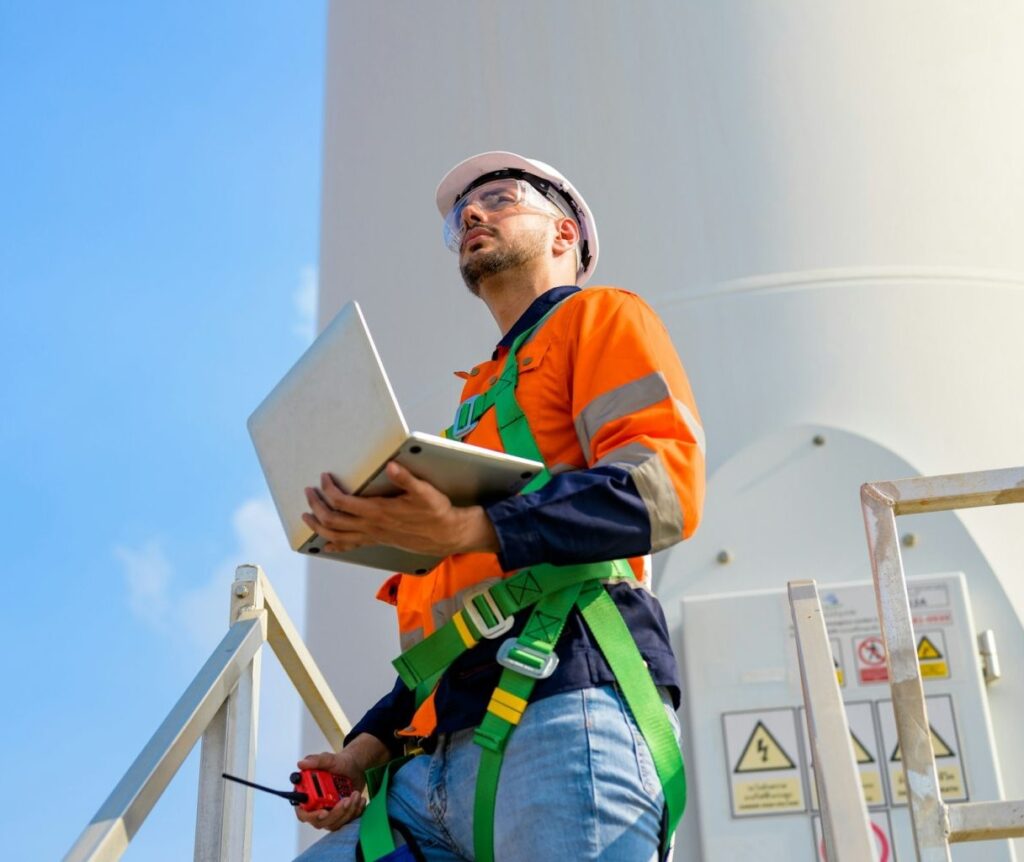
As an active participant in India’s green energy transition, we contribute to the decarbonization of key sectors, supporting the nation’s journey toward a net-zero future.
India’s CBG Opportunity: De-risked & Backed by Policy
SATAT & Synchronisation Schemes ensure 10–15-year offtake contracts
Capital subsidies, tax benefits and fertiliser market assistance
A scalable, low-risk green energy opportunity for India
Supply Chain Security & Scalability
Secure Feedstock Agreements enable reliable operations
Untapped diverse, abundant input feed enable scalability across India;
- Press Mud contracts with Sugar Mills
- Municipal Solid Waste – urban waste streams, especially wet & organic fractions with long term agreements
- Agricultural Residue Crop- stubble, paddy straw, maize stalks, etc
- Napier grass, sorghum and other high-yield biomass
Value Added Products & Revenue Streams
Secure offtake of Fermented Organic Manure (FOM) through the ‘GOBARdhan’ Scheme, in India
Biochar
CO2 capture for food and beverage industry
Carbon Credits
BIOMASS PELLETING
Altanova is building capabilities in densified biomass fuel supply.
Current activities include:
- Operations & maintenance of a 180 TPD biomass pelleting plant
- Developing dedicated pelleting facilities for large thermal power plants
- Engagements with both private power producers and NTPC Limited
Strategic Importance
Pellets play a key role in:
- Coal substitution in thermal power plants
- Biomass-based steam generation
- Feedstock for biomass gasification projects
This creates strong integration with other Altanova bioenergy verticals.
STEAM AS A SERVICE
Altanova is developing Steam-as-a-Service solutions for industrial decarbonization.
The model involves installing biomass-based boiler systems and supplying steam directly to industrial clients.
Target Industries
- Textiles
- Pharmaceuticals
- Food & Beverage
- Chemicals
- Tyres
- Process industries
Solution Features
- High-pressure and medium-pressure steam systems
- Replacement of fossil fuel boilers
- Long-term steam supply agreements
This enables industries to reduce Scope 1 emissions while maintaining operational reliability.
BIOMASS Gasification (SYNGAS & BIOCOKE)
Biomass gasification offers a powerful pathway for decarbonizing heavy industries.
Process
Biomass gasification produces Syngas, a mixture of:
- Hydrogen (H₂)
- Carbon Monoxide (CO)
- Methane (CH₄)
Industrial Applications
- Replacement of Natural Gas / PNG
- Use in blast furnaces
- Industrial heating and processing
Solid Residue
The gasification process produces BioCoke, which can substitute coking coal with:
- Fixed Carbon content exceeding 75%
Additional Advantage
Hydrogen from biomass gasification can potentially be produced at sub ₹300/kg and at the point of consumption, improving economics for industrial users.
SUSTAINABLE AVIATION FUEL (SAF)
- Hydrogen (H₂)
- Carbon Monoxide (CO)
- Methane (CH₄)
- Replacement of Natural Gas / PNG
- Use in blast furnaces
- Industrial heating and processing
- Fixed Carbon content exceeding 75%